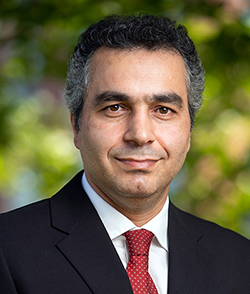

Dr. Arash Habibi Lashkari is a full professor and Canada Research Chair (CRC) in Cybersecurity. As the founder and director of the Behaviour-Centric Cybersecurity Center (BCCC) and co-founder of the Cyber Security Cartoon Award (CSCA), he is a Senior Member of IEEE and a Professor at York University. He also serves as an Editorial Board Member of Computers & Security (Elsevier), Scientific Reports (Nature Portfolio), and Computational Intelligence (Wiley). His research focuses on cyber threat modeling and detection, malware analysis, big data security, internet traffic analysis, and generating cybersecurity datasets.
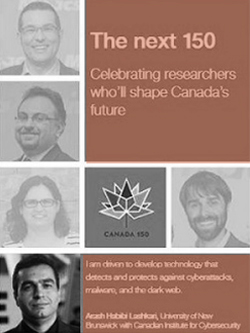
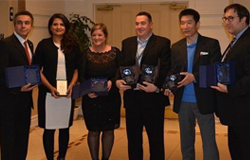
Dr. Lashkari has over 29 years of teaching experience, spanning several international universities, and was responsible for designing the first cybersecurity Capture the Flag (CTF) competition for post-secondary students in Canada. He has been the recipient of 15 awards at international computer security competitions - including three gold awards - and was recognized as one of Canada’s Top 150 Researchers for 2017. In 2020, Dr. Lashkari was recognized with the University of New Brunswick’s prestigious Teaching Innovation Award for his personally-created teaching methodology, the Think-Que-Cussion Method.
He is the author of ten published books and more than 110 academic articles on a variety of cybersecurity-related topics and the co-author of the national award- winning article series, “Understanding Canadian Cybersecurity Laws”, which was recently recognized with a Gold Medal at the 2020 Canadian Online Publishing Awards, remotely held in 2021.
Building on over two decades of concurrent industrial and development experience in network, software, and computer security, Dr. Lashkari’s current work involves the development of vulnerability detection technology to provide protection to network systems against cyberattacks. He simultaneously supervises multiple research and development teams working on projects related to behavior-centric cybersecurity, AI-driven threat detection, network and encrypted traffic analysis, malware and memory forensics, IoT and cyber-physical system security, CAV network security, DeFi and blockchain threat analysis, honeynet-based data generation, and trustworthy AI for cybersecurity applications.